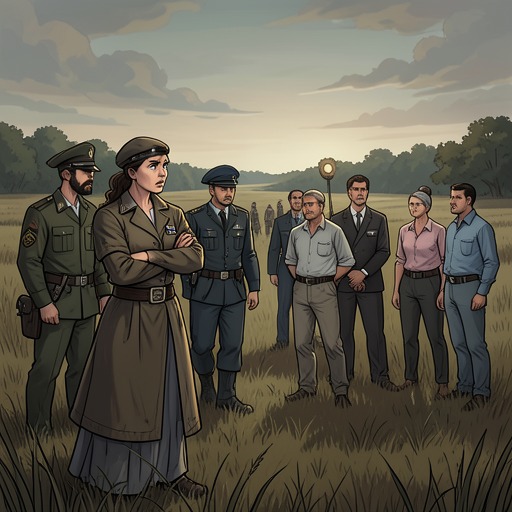
Ashlar's policy of isolating the secret tribe
Blood CanticleAshlar’s isolation policy for the Secret People was both protective and restrictive: it shielded the community from a world Oberon said routinely killed male Taltos, while keeping its members under close parental supervision and apart from ordinary communication with that world.
Purpose and Protective Logic
Oberon explains that human beings generally killed male Taltos while allowing women to live, a danger that made the community’s isolation seem necessary to him. He says he did not want to escape: life among the Secret People was good, and he valued the safety and care provided by his parents. The policy’s protection, however, depended on controlling how the community encountered outsiders.
Means of Isolation
Ashlar and his partner took the Secret People on trips to major cities, including Rome and Bombay, and taught them to observe human beings and pretend to be human. Oberon remembers a plane used for these journeys, teachers brought to the island for periods of two or three weeks, and an extensive library of books and films in the main building. The young Taltos could learn about the wider world, but their education and travel remained organized by their parents.
The limits on contact were explicit: Oberon recalls that there were no telephones and no Internet. He later calls this possibly a fatal error, suggesting that the insulation intended to keep the community safe also left it without ordinary channels of connection. Their visits to cities were supervised, and the island’s routine included a cleanup crew that came twice a week; Oberon distinguishes his own preference for staying away from the jungle from the excursions made by Elath, Releth, and Seth.
Reproduction and Community Control
Oberon describes another, harsher dimension of Taltos governance: his father, he says, could not control the young males, and secret births occurred repeatedly. He frames rule over the community as entangled with deciding which births and pairings were permitted, even proposing chastity belts as an alternative to killing unwanted newborns and those who reproduced against the rules. His account does not present reproductive control as a separate matter from isolation; both belonged to a system in which the parents managed the community’s safety and internal life.
Legacy and Significance
The policy’s consequences contrast with the family structure later described by Mona and Rowan. The Mayfair Legacy required family members to keep the Mayfair name, and its Heiress had to live in the family house and be able to bear children. Where Ashlar’s household attempted to manage a Taltos community through separation, supervision, and reproductive rules, the Mayfair system tied inheritance and residence to lineage and childbirth. Oberon’s affection for the life his parents created sits beside his recognition that the absence of telephones and Internet may have been fatal: protection and isolation were inseparable, and the safeguards that preserved the community’s sheltered life also constrained its contact with others.